What is a sidechain?
A sidechain is a separate blockchain linked to a main chain by a two-way bridge. Learn how a sidechain works, why it's used, and where its real risks sit.
Quick answer
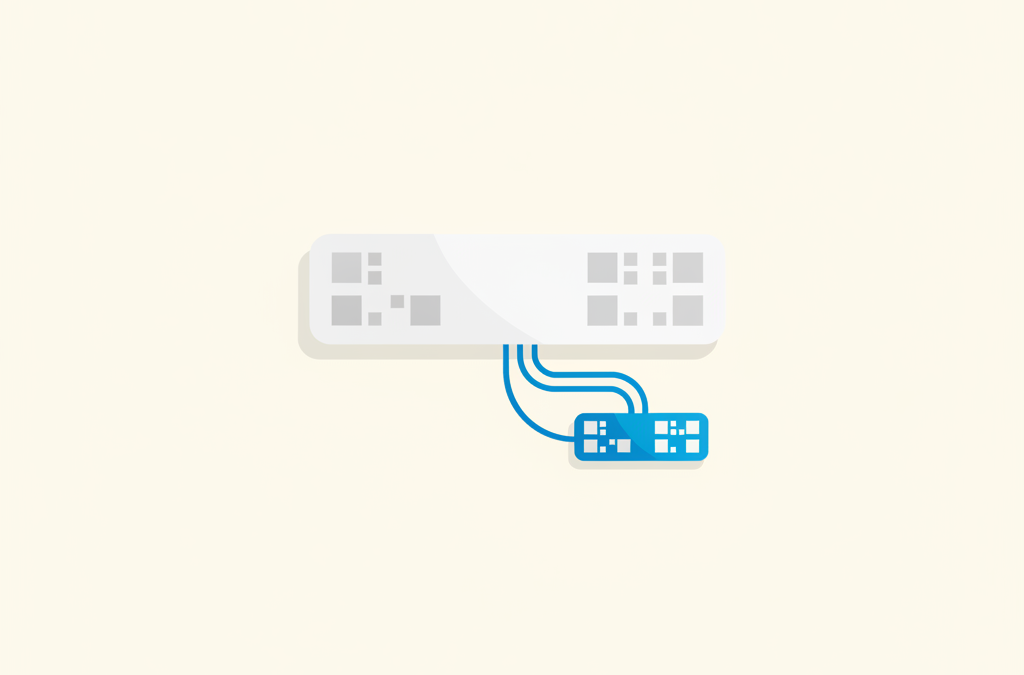
A sidechain is a separate blockchain that runs alongside a main chain and links to it through a two-way bridge. It has its own consensus and validators, so it can be faster and cheaper, but it doesn't inherit the main chain's security. You're trusting the sidechain and its bridge.
Key points
- A sidechain is an independent blockchain linked to a main chain by a bridge
- It runs its own consensus and validators, so it does not inherit the main chain's security
- Assets move by lock-and-mint: locked on the main chain, minted on the sidechain
- Sidechains trade some security for higher speed and lower fees
- The bridge holds the backing assets and is the main point of risk
A sidechain is a separate blockchain that runs alongside a main blockchain — its “parent,” or Layer 1 — and connects to it through a two-way bridge that lets assets move between the two. It has its own blocks, its own validators, and its own rules, so it can run faster or cheaper than the main chain without changing how the main chain works.
That independence is the whole point. It’s also the first thing to understand before you trust one. A sidechain does not inherit the security of the chain it connects to. It stands on its own consensus, and you’re relying on that consensus and on the bridge between the two chains. This article explains how a sidechain works, why people build them, and where the risks actually sit.
What a sidechain is, in plain terms
Every blockchain is a shared ledger that a network of computers agrees on. A sidechain is simply a second such ledger, set up to be interoperable with a first. You lock or deposit an asset on the main chain, and a matching representation of it appears on the sidechain for you to use. Later you reverse the process and reclaim the original asset on the main chain.
The two chains are joined by a bridge, but they aren’t the same system. The sidechain keeps its own consensus mechanism, its own set of validators or miners, and its own block schedule. That’s what separates a sidechain from a Layer 2 network — something we’ll come back to.
How a sidechain works step by step
The mechanics are easier to follow as a sequence:
- Lock on the main chain. You send the asset to a bridge contract or a custodian on the parent chain. Those coins are now frozen and can’t be spent there.
- Mint on the sidechain. The bridge signals the sidechain that a deposit happened, and an equivalent amount is issued to you on the sidechain. This “peg” is meant to keep one sidechain token backed by one locked main-chain token.
- Use the sidechain. You transact on the sidechain, where blocks may confirm faster and fees may run lower because the network is smaller or built differently.
- Burn and release. To go back, the sidechain tokens are burned or locked, the bridge is notified, and the original asset is released on the main chain.
Because the sidechain runs its own consensus, it can make trade-offs the main chain won’t. It might use a smaller validator set, a proof-of-stake variant, or a different block time. Those choices buy speed and low cost — and they’re exactly where the security differences come from.
Sidechain vs Layer 2: the key distinction
People throw “sidechain” and “Layer 2” around loosely, but they aren’t the same thing, and the difference matters for how safe your funds are.
| Property | Sidechain | Layer 2 (rollup) |
|---|---|---|
| Security source | Its own consensus and validators | Posts data/proofs to the main chain and inherits its security |
| If it fails | Main chain is unaffected; sidechain funds are at risk | Users can usually recover funds from data on the main chain |
| Data availability | Kept on the sidechain itself | Made available to or on the Layer 1 |
The short version: a Layer 2 leans on the main chain for its security guarantees, while a sidechain provides its own. That makes a sidechain more flexible and often faster, but it means a weakness in the sidechain’s own validator set has no main chain to fall back on.
Why projects build sidechains
Sidechains solve real problems. A busy main chain can turn slow and expensive when demand spikes, because every user competes for the same limited block space and bids up gas fees. Shift activity onto a sidechain and that pressure eases.
- Throughput. A smaller or differently designed network can process more transactions per second.
- Cost. Lower demand for block space usually means lower fees.
- Experimentation. A sidechain can trial new features, block times or virtual machines without asking the main chain to change.
- Specialisation. A chain can be tuned for one use, such as gaming or payments.
- Compatibility. Many sidechains deliberately mirror the main chain’s tooling so existing contracts and wallets work with little modification, which lowers the effort of moving an application over.
None of this asks the main chain to slow down or rewrite its rules, which is part of the appeal. The main chain keeps doing what it does best — staying maximally secure and decentralised — while the sidechain soaks up traffic that cares more about speed and cost than that last measure of security. In practice a sidechain is a way to let one network specialise without forcing the whole ecosystem into the same trade-off.
Ethereum’s own documentation describes sidechains as independent chains with their own consensus that are compatible with the main network — a useful way to keep the definition honest.
The peg is a promise, not a law of nature
The “peg” between a locked main-chain asset and the token you receive on the sidechain is worth dwelling on, because newcomers often assume it’s automatic. It isn’t. The one-to-one relationship holds only as long as the bridge actually keeps the locked assets safe and honestly mints and burns tokens to match. Nothing about the sidechain physically forces this — it’s a promise enforced by whatever code or operators run the bridge.
That distinction matters when you read claims about a sidechain. A token on the sidechain is really an IOU for an asset held elsewhere. If the entity or contract holding that asset is sound, the IOU is good. If it isn’t, you can be left holding a sidechain token whose backing has evaporated. So when you weigh up a sidechain, you’re really weighing two things at once: the chain’s own consensus, and the integrity of the peg that ties it to the main chain.
Where the risks live
Two areas deserve your attention, and both follow directly from how a sidechain is built.
The consensus. Because a sidechain secures itself, its safety is only as strong as its validator set. A chain run by a handful of validators is easier to disrupt or collude on than a large, well-distributed network. When you hold assets on a sidechain, you’re trusting that specific set of operators — not the main chain.
The bridge. The lock-and-mint bridge holds the real assets backing everything circulating on the sidechain, which makes it a concentrated target. Bridges have historically been among the most attacked components in crypto. If a bridge is compromised, the pegged tokens on the sidechain can lose their backing even while the sidechain itself keeps running. Our explainer on crypto bridges and why they get hacked digs into that failure mode.
What this means for you
A sidechain is a practical way to get speed and low fees, and many are run responsibly. But treat “on a sidechain” as a different security context from “on the main chain” — not a free upgrade. Before you move meaningful value:
- Check who validates the sidechain, and how decentralised that set really is.
- Understand how the bridge secures the assets it locks, and who controls it.
- Remember that a sidechain failing doesn’t endanger the main chain, but it can endanger funds you hold on the sidechain.
- Keep only what you need on the sidechain, and bridge the rest back when you’re done.
Understood this way, a sidechain is a useful tool with clear trade-offs: you gain performance, and in exchange you take on the sidechain’s own security instead of the main chain’s. Knowing which one you’re relying on at any given moment — that’s the whole skill.
Sources
Frequently asked questions
Is a sidechain the same as a Layer 2?
No. A Layer 2 relies on the main chain for security, so users can usually recover funds from Layer 1 data. A sidechain runs its own consensus, so its safety depends on its own validators, not the main chain.
Are funds on a sidechain safe?
They are only as safe as the sidechain's consensus and the bridge that backs its tokens. If either is compromised, sidechain funds can be at risk even though the main chain is unaffected.
Why do projects use sidechains?
Mainly for higher throughput and lower fees, and to experiment with features without changing the main chain. The trade-off is taking on the sidechain's own security instead of the main chain's.
Related
What Is Tokenomics? How Token Economies Work
Tokenomics is the study of how a crypto token's supply, distribution and incentives are designed; here is what to look…
What Is a Vanity Address in Crypto?
A vanity address is a crypto address with a custom pattern; here is how they are made and the security…
Hot Wallet vs Cold Wallet: What’s the Difference?
Discover the differences between hot wallet vs cold wallet storage for cryptocurrencies, and learn which might be best for your…