What is a crypto bridge (and why they get hacked)?
A crypto bridge moves assets between blockchains by locking and minting wrapped tokens. Learn how a crypto bridge works, and why bridges get hacked so often.
Quick answer
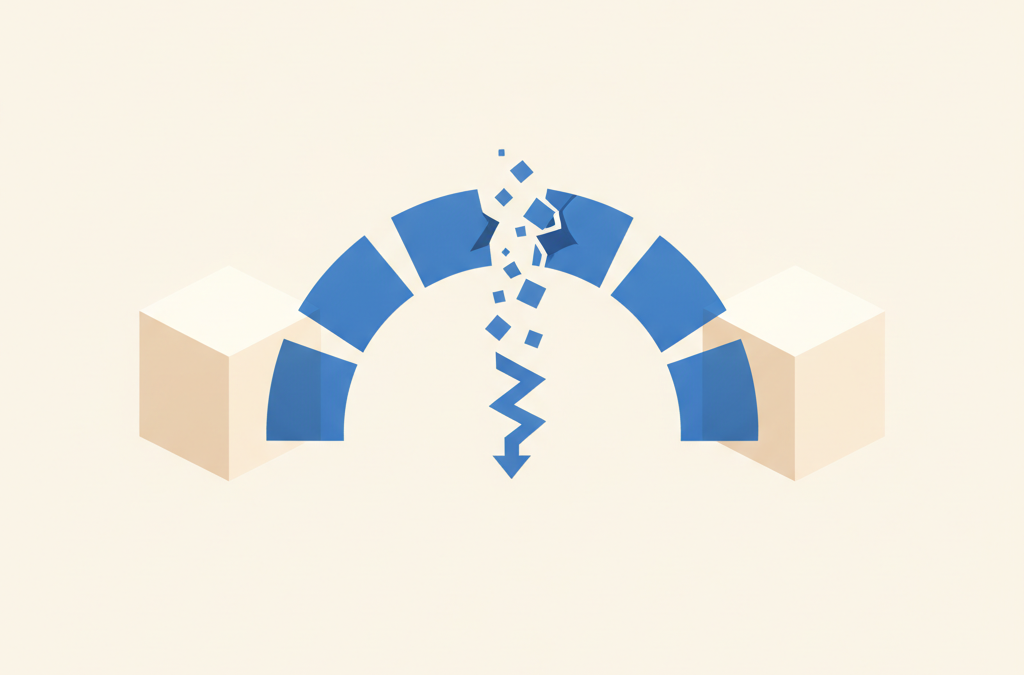
A crypto bridge is a service that moves assets between blockchains, usually by locking your asset on one chain and minting a matching wrapped token on another. Bridges are useful but get hacked often, because they lock up a large pool of assets behind complex, sometimes off-chain, machinery.
Key points
- A crypto bridge moves assets between blockchains by lock-and-mint
- A wrapped token is a claim on an asset locked in the bridge, not the asset itself
- Bridges concentrate value in one pool, making them a high-value target
- Forged proofs, stolen signing keys and contract bugs are common exploits
- Treat a bridge as a place to pass through, not to store value
A crypto bridge is a service that lets you move assets from one blockchain to another, since blockchains cannot natively talk to each other. It usually works by locking your asset on the first chain and issuing a matching “wrapped” token on the second, so value appears to cross over even though the original coin never actually leaves its home chain.
Bridges are essential plumbing for a multi-chain world, and they have also been among the most heavily exploited targets in all of crypto. This article explains how a crypto bridge works, the different trust models, and — importantly for your safety — why bridges get hacked so often and what that means for you.
Why bridges exist
Each blockchain is its own isolated system with its own ledger. A coin native to one chain has no meaning on another; there is no built-in postal service between them. As people spread activity across many chains, sidechains and Layer 2s, they needed a way to bring assets along. Bridges fill that gap.
How a crypto bridge works
The most common design is called lock-and-mint, and it runs in two directions:
- Lock. You deposit an asset into the bridge on the source chain. The bridge holds it, and those coins are now immobilised.
- Mint. The bridge creates an equivalent “wrapped” token on the destination chain and gives it to you. This wrapped token is a claim on the locked original.
- Burn and release. To go back, you burn the wrapped token on the destination chain, and the bridge releases your original asset on the source chain.
The whole system depends on one promise: every wrapped token on the far side is fully backed by a real asset locked on the near side. As long as that holds, the wrapped token is redeemable. The trouble is that keeping that promise depends on the bridge’s own security, which is where the danger concentrates.
Trust models: who is holding the keys
Bridges differ in who or what controls the locked funds, and this is the single most important thing to understand about any bridge.
| Model | Who secures the funds | Main risk |
|---|---|---|
| Custodial / trusted | A company or a small set of operators | You trust them not to fail or misbehave, much like a custodial service |
| Contract-based / trust-minimised | Smart contracts and cryptography | Bugs in the contract code can be exploited |
Neither model is automatically safe. A trusted bridge is only as honest and secure as its operators; a contract-based bridge is only as sound as its code. Ethereum’s own documentation is blunt that bridging carries real risk and that bridges have been a frequent target of attacks.
Why bridges get hacked so often
Bridges concentrate risk in a way few other parts of crypto do. Several factors line up against them:
- They hold a giant pot. A bridge locks up all the assets backing its wrapped tokens in one place. That makes it a single, high-value target — the honey pot problem.
- They are complex. A bridge has to watch two chains at once, verify events on one and act on the other, and manage approvals and signatures. More moving parts means more places for a bug to hide.
- They rely on off-chain components. Many bridges use external validators or relayers to confirm that a deposit really happened. If an attacker forges or steals the keys that authorise minting, they can mint wrapped tokens that are not backed by anything and drain the pot.
- They are newer and less battle-tested. Bridge code is often custom and has had less time under adversarial pressure than the base chains it connects.
Put together, these are why several of the largest crypto exploits on record have been bridge hacks. The common thread is not one specific bug but the structure: a bridge is a concentrated store of value guarded by complex, sometimes off-chain, machinery.
At an awareness level, the failures tend to fall into a few recognisable categories. Understanding them helps you judge risk without needing to be a developer:
- Forged proofs. The attacker tricks the bridge into believing a deposit occurred when it did not, so it mints wrapped tokens with no backing.
- Stolen signing keys. If the keys that authorise the bridge to release or mint funds are compromised, the attacker can move funds directly.
- Smart-contract bugs. A flaw in the lock or mint logic lets an attacker withdraw more than they deposited.
The defensive response from the industry has been more audits, wider validator sets, and time-tested code, but no bridge should be treated as risk-free.
Why the wrapped-token model amplifies the damage
There is a second, quieter reason bridge hacks are so painful. When a bridge is drained, it is not only the stolen funds that suffer. Every wrapped token still circulating on the destination chain was backed by the assets that just disappeared. Those wrapped tokens can suddenly become unbacked claims, so people who never interacted with the attacker can still be left holding tokens whose value has collapsed.
This is why a wrapped token should always be read as a claim on a reserve, not as the underlying asset itself. The claim is only as good as the reserve behind it and the security guarding that reserve. It is the same logic that runs through token approvals and custody generally: in crypto, you are constantly deciding whose promise you are relying on, and a bridge asks you to rely on the promise that a distant pot of locked assets is still there and still safe.
What this means for you
Bridges are useful and often unavoidable, but they deserve caution:
- Understand the trust model before you bridge. Are you trusting a company, a validator set, or audited contracts?
- Don’t leave value sitting in a bridge or in wrapped tokens longer than you need to. The backing pot is the target.
- Prefer well-established, audited bridges over brand-new ones chasing high yields, and be wary of anything that pressures you to move funds quickly.
- Bridge only what you need, and remember that a wrapped token is a claim, not the original asset — its value depends entirely on the bridge staying solvent.
- Be alert to fake bridge websites. Attackers clone popular bridge front-ends to trick people into approving malicious transactions, so reach bridges through links you trust and check the address carefully.
None of this means bridges should be avoided altogether. They make a multi-chain ecosystem usable, and many are run by careful teams with strong track records. The point is to size your exposure to the risk. Passing a modest amount through a reputable bridge to use an application on another chain is an ordinary activity; parking a large share of your holdings in wrapped tokens for a long time is a concentrated bet on that bridge never being compromised. Knowing the difference is what turns a bridge from a hidden hazard into a tool you use on your own terms.
The bottom line
A crypto bridge moves value between chains by locking an asset on one side and minting a wrapped version on the other. It is genuinely useful, but it works by concentrating a large amount of value behind complex machinery, which is exactly why bridges have been hacked so often. Treat any bridge as a place to pass through, not a place to store value, and always know who or what is guarding the funds on the other side.
Sources
Frequently asked questions
What is a crypto bridge?
A crypto bridge lets you move assets between blockchains, usually by locking your asset on one chain and minting a matching wrapped token on another. The wrapped token is a claim on the locked original.
Why do crypto bridges get hacked so often?
Bridges lock up all the assets backing their wrapped tokens in one place, making them a high-value target, and they rely on complex, sometimes off-chain machinery. Forged proofs, stolen signing keys and contract bugs are common failure patterns.
Are wrapped tokens safe to hold?
A wrapped token is only as good as the bridge backing it. If the bridge is drained or fails, the wrapped token can lose its backing, so it is safer to bridge only what you need and not store value in bridges.
Related
Seed phrases: what they are and how people lose them
Seed phrases explained: what a recovery phrase is, why it controls your entire wallet, how people lose them, and how…

What is a multisig wallet?
A multisig wallet needs more than one key to approve a transaction. Learn what a multisig wallet is, how the…

How crypto regulation differs by jurisdiction
Crypto regulation differs by jurisdiction: why the same token can be a security, commodity or property, and how licensing, tax…