What Is a Vanity Address in Crypto?
A vanity address is a crypto address with a custom pattern; here is how they are made and the security risks to know.
Quick answer
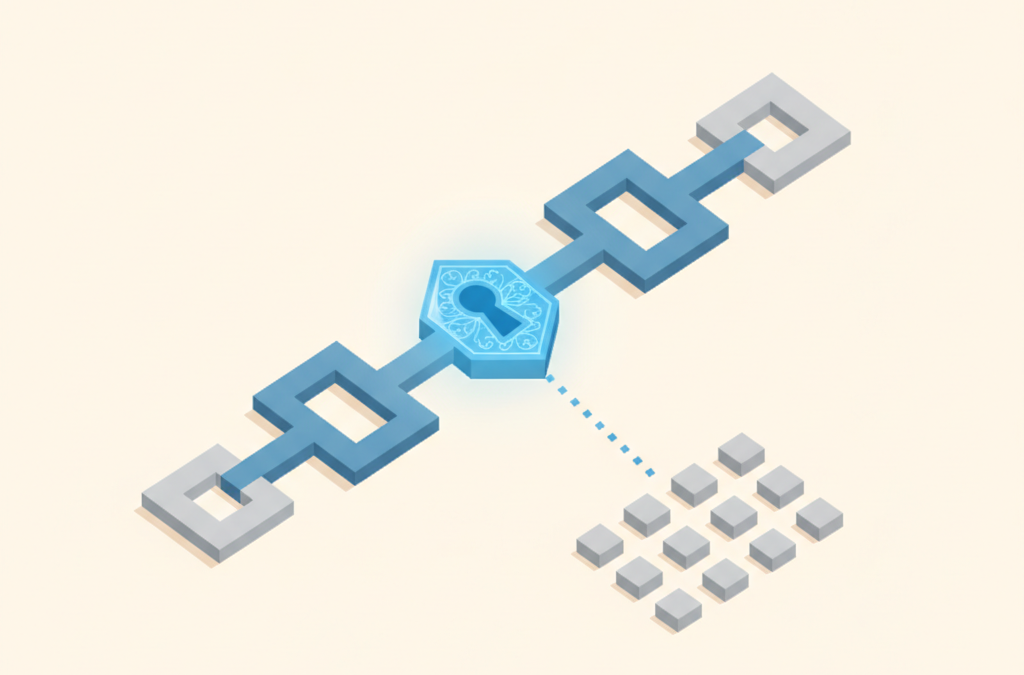
A vanity address is a cryptocurrency address that contains a chosen, human-readable pattern, such as a name or word at the start. It works exactly like any other address and is secured by the same cryptography; the pattern is purely cosmetic. Vanity addresses are created by generating huge numbers of random key pairs until one produces an address matching the desired pattern, which makes longer patterns exponentially harder to find.
Key points
- A vanity address is a normal crypto address that contains a chosen pattern, such as a recognizable prefix.
- It functions identically to any other address and uses the same underlying cryptography; the pattern is cosmetic.
- Generators brute-force random key pairs and check each derived address until one matches the desired pattern.
- Each extra pattern character multiplies the search cost, so long patterns quickly become infeasible.
- Untrusted generators are dangerous because the operator may keep the private key; split-key methods reduce this.
- The 2022 Profanity tool flaw let attackers recompute keys, contributing to a major loss and showing the risk of weak randomness.
A vanity address is a cryptocurrency address that contains a chosen, human-readable pattern — such as a name, word, or set of characters at the beginning. It sends and receives funds exactly like any other address and is protected by the same cryptography; the only difference is cosmetic. Think of it as the crypto equivalent of a personalized license plate.
Vanity addresses can make a wallet easier to recognize, but the way they are produced introduces security considerations that are easy to overlook. This guide explains how they are generated, why longer patterns are so much harder to create, and where the real risks lie.
What is a vanity address in simple terms?
Ordinary crypto addresses are long strings of seemingly random characters, because they are derived from cryptographic keys. A vanity address is one of those strings that happens to begin with something meaningful — for example a prefix spelling a short word after the required format characters.
Functionally, nothing changes. The address still maps to a private key, still receives funds, and is still secured by the same elliptic-curve cryptography every other address uses. The pattern carries no special powers and grants no advantages on the network; it is there purely for human readability.
How is a vanity address generated?
Crypto addresses are built from public keys through one-way functions, so there is no formula that produces a chosen pattern directly. Instead, generation is brute force: the tool creates a random private key, derives the matching public key and address, and checks whether the address contains the target pattern. If not, it discards the pair and tries again.
This loop repeats millions or even billions of times until a match appears. On Bitcoin, for instance, an address is derived by hashing the public key and encoding the result, a pipeline with no reverse shortcut. The generator is simply rolling the dice over and over, which is why the process is computationally intensive.
Why do longer patterns take so much longer?
The cost of finding a match grows exponentially with pattern length, because each extra character makes a random address far less likely to fit. The table below gives a rough sense of the scaling.
| Pattern length | Relative difficulty | Typical effort |
|---|---|---|
| Short (a few characters) | Low | Seconds to minutes |
| Medium | High | Hours to days on strong hardware |
| Long (many characters) | Extreme | Often infeasible |
For legacy Base58 Bitcoin addresses, each additional required character multiplies the work by roughly 58 times; for Bech32 addresses the factor is about 32. A four-character prefix might take seconds, while an eight-character pattern can require days even with GPU acceleration — and beyond that, the search quickly becomes impractical.
Are vanity addresses safe?
A vanity address generated correctly is exactly as safe as any other address, because the underlying cryptography is unchanged. The danger lies entirely in the generation process, and two problems dominate.
The first is untrusted generators. If you ask a website or third party to create a vanity address for you, that operator may quietly keep a copy of the private key and later steal the funds. The safer approach for outsourcing is split-key generation, where the requester and the service each contribute part of the key so that no single party ever holds the whole thing.
The second is weak randomness. In 2022, an Ethereum vanity tool called Profanity seeded its random number generator with only a 32-bit value, meaning there were only about 4.3 billion possible seeds instead of the astronomically larger space real security requires. Attackers could recompute the private keys, and the flaw was linked to a theft of roughly 160 million dollars from addresses generated with it.
What other risks should users know?
Beyond generation, vanity addresses can feed a scam called address poisoning. Fraudsters generate an address that closely mimics one a victim already uses — often matching the first and last few characters — and plant it in the victim’s transaction history. If the victim later copies an address from that history without checking the middle, funds can be sent to the attacker.
The defense is simple discipline: verify the entire address, not just the beginning and end, and confirm it through a trusted channel before sending. A recognizable prefix can give a false sense of certainty, so a familiar-looking address is not a substitute for full verification.
None of this is investment or trading advice; it is a description of how a tool works and where it can go wrong. Anyone generating a vanity address should use open-source software they can inspect, run it on their own hardware, and never hand a private key to a third party.
Why do people use vanity addresses at all?
Given the effort and the pitfalls, it is fair to ask why vanity addresses exist. The main reason is recognizability. A business or public project may want a donation or deposit address that starts with its name, making it easier for supporters to recognize at a glance and slightly harder to swap out unnoticed. A memorable prefix can also serve as a light branding touch.
These benefits are modest, though, and they do not replace proper verification. A recognizable start does not prove the rest of the address is correct, and attackers can craft look-alikes that share the same prefix. The safe way to treat a vanity address is as a convenience layered on top of normal checks, never as a shortcut around them.
For anyone who still wants one, the checklist is short: choose reputable open-source software, generate keys offline on hardware you control, keep the pattern short enough to be practical, and store the resulting private key with the same care as any other. Handled that way, the vanity part is harmless; handled carelessly, it becomes an attack surface.
The bottom line
A vanity address is an ordinary crypto address dressed up with a chosen pattern, created by brute-forcing key pairs until one matches. It is as secure as any other address when generated properly, but the process invites real dangers: untrusted generators that keep your key, weak randomness that lets attackers rebuild it, and look-alike addresses used for poisoning scams. Used carefully — with trusted, well-vetted tools — a vanity address is a harmless bit of personalization; used carelessly, it can cost everything.
Sources
Frequently asked questions
Is a vanity address less secure than a normal one?
The address itself uses the same cryptography as any other, so a properly generated vanity address is just as secure. The risk comes from how it is generated. A weak random number source or an untrusted third-party generator can compromise the private key regardless of how the address looks.
How are vanity addresses created?
There is no shortcut to producing a specific pattern, because addresses are derived from keys through one-way functions. A generator creates random key pairs, derives each address, and checks whether it matches the desired pattern, repeating the process potentially billions of times until it finds a match.
Why do longer patterns take so much longer?
Each additional required character multiplies the number of attempts needed, because far fewer random addresses will happen to match a longer pattern. A short prefix may take seconds, while an eight-character pattern can take days even with powerful hardware, and longer ones become impractical.
What was the Profanity vulnerability?
Profanity was an Ethereum vanity tool that seeded its random number generator with only a 32-bit value, drastically shrinking the range of possible keys. This let attackers reconstruct private keys for addresses it produced, and it was linked to a large 2022 theft, illustrating why weak randomness is dangerous.
What is address poisoning?
Address poisoning is a scam where a fraudster generates an address that closely resembles one a victim uses, often sharing the same start and end characters. The attacker seeds it into the victim's transaction history hoping they copy the wrong address later. Always verify the full address, not just the ends.
Related
What is a multisig wallet?
A multisig wallet needs more than one key to approve a transaction. Learn what a multisig wallet is, how the…
What Is Tokenomics? How Token Economies Work
Tokenomics is the study of how a crypto token's supply, distribution and incentives are designed; here is what to look…
What is a testnet?
A testnet is a practice copy of a blockchain where the coins have no value. Learn what a testnet is,…