Crypto
What Is a Paper Wallet? How It Works & Risks
A paper wallet is an offline printout of your crypto keys; it removes online hacking risk but adds physical loss,…
How cryptocurrency actually works — blockchains, keys, wallets, transactions, mining and validation, security, and the regulation around it. Clear mechanics, written by named authors with sources. Editorial only; not a trading platform.
A paper wallet is an offline printout of your crypto keys; it removes online hacking risk but adds physical loss,…
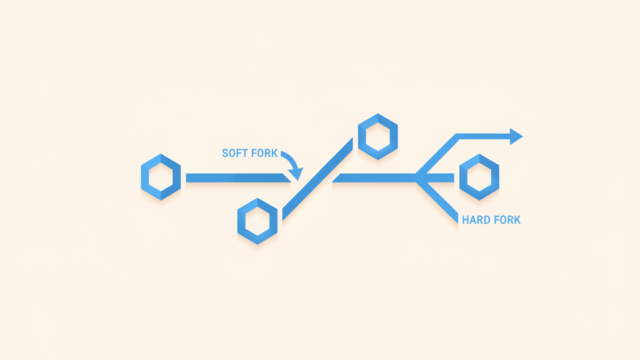
A soft fork is a backward-compatible blockchain upgrade that tightens the rules, so old nodes still accept new blocks, unlike…
Proof of authority is a consensus model where a few pre-approved, identified validators produce blocks by staking their reputation, not…
A vanity address is a crypto address with a custom pattern; here is how they are made and the security…
A replay attack rebroadcasts a valid transaction on another chain; here is how it happens after a fork and how…
Tokenomics is the study of how a crypto token's supply, distribution and incentives are designed; here is what to look…
An NFT is a unique blockchain token that proves ownership of a specific item; here is how non-fungible tokens actually…
A hash function turns any input into a fixed-length fingerprint; here is how it works and why blockchains rely on…
A multisig wallet needs more than one key to approve a transaction. Learn what a multisig wallet is, how the…
Cold storage in crypto means keeping your private keys offline. Learn what cold storage is, how it protects your coins,…