What Is Proof of Authority (PoA)?
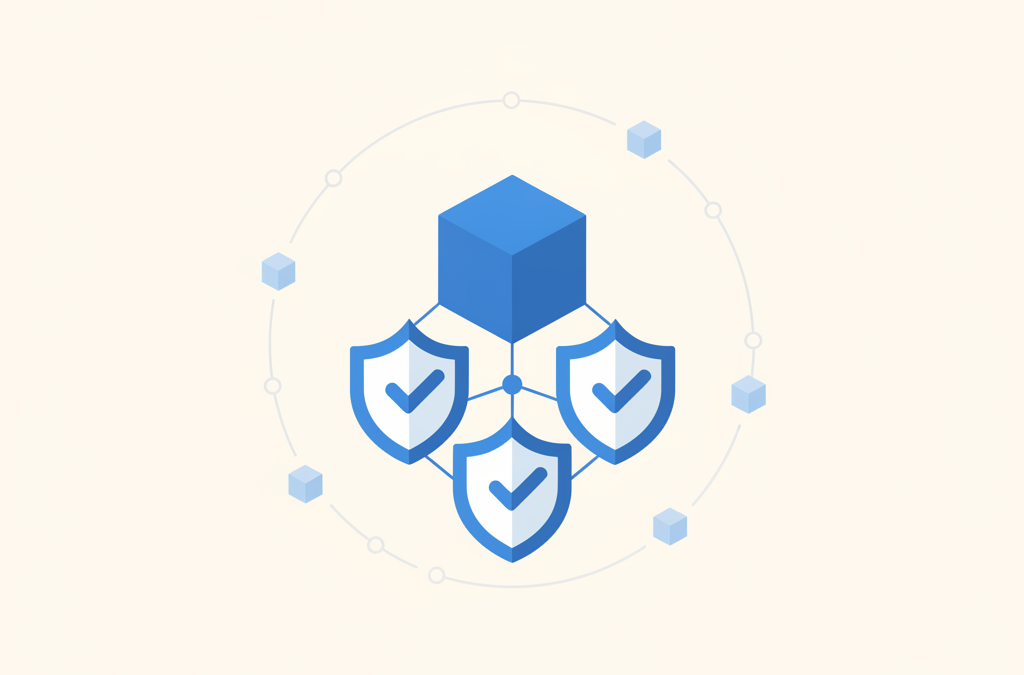
Proof of authority is a consensus model where a few pre-approved, identified validators produce blocks by staking their reputation, not coins or power.
Quick answer
Proof of authority (PoA) is a consensus mechanism in which a small set of pre-approved, publicly identified validators take turns producing blocks. Instead of spending electricity like proof of work or locking up coins like proof of stake, validators stake their real-world identity and reputation. It is fast and cheap but relies on trusting those chosen authorities.
Key points
- In proof of authority, blocks are produced by a limited group of vetted validators whose identities are publicly known.
- Validators put their reputation and identity on the line rather than computational power (proof of work) or economic stake (proof of stake).
- PoA networks are fast and energy-efficient because only a few known nodes need to agree, avoiding costly mining.
- Ethereum's most common PoA implementation is Clique (EIP-225), and PoA is widely used on testnets and private chains.
- The main trade-off is centralization: a small, permissioned validator set is easier to censor or collude than an open network.
- PoA suits private, consortium, and development networks more than public chains that prioritize permissionless participation.
Proof of authority (PoA) is a blockchain consensus mechanism in which a small, pre-approved group of publicly identified validators takes turns producing and validating blocks. Rather than competing through computing power or locked-up coins, these validators stake their real-world identity and reputation on behaving honestly.
The result is a network that is fast, cheap to run, and energy-efficient, at the cost of being far more centralized than open systems. Because only a handful of known parties can create blocks, PoA is used mostly on private chains, consortium networks, and public testnets rather than on large permissionless blockchains.
What is proof of authority?
Proof of authority is a reputation-based consensus model. A fixed, vetted set of nodes, often called authorities or signers, are the only participants allowed to validate transactions and append new blocks. Everyone on the network knows who those validators are.
Consensus mechanisms exist to answer a single question: who gets to write the next block, and why should everyone else trust it? Proof of work answers with electricity, proof of stake answers with capital at risk, and proof of authority answers with vetted identity. The validators are trusted because they have been verified and because misbehavior would publicly damage them.
This makes PoA a permissioned model. In a permissionless system like Bitcoin, anyone can join and try to produce blocks. In a permissioned system, participation is gated: a governing body decides who may validate. That single design choice shapes everything else about how PoA behaves, from its speed to its weaknesses.
How does proof of authority work?
First, validators are selected. This usually happens through governance, manual vetting, or a know-your-customer (KYC) process, so each authority is a named individual or organization rather than an anonymous address. According to ethereum.org, this public identity is precisely what makes the model function: if a validator does anything wrong, their identity is known.
Once chosen, validators produce blocks in a rotation. A common rule is that the same validator cannot sign two blocks in a row, which spreads block production across the set and limits any single party’s control over the chain at a given moment.
Because there is no mining race and no need to gather votes from thousands of nodes, blocks confirm quickly and predictably. On Ethereum, the best-known PoA implementation is Clique, standardized as EIP-225, which was used to run testnets before the ecosystem moved to other designs.
Membership is not necessarily fixed forever. Most PoA systems include a governance procedure for adding or removing validators, such as a vote among the existing authorities. This lets a network replace a validator that goes offline or misbehaves, but it also concentrates power in whoever controls that governance process.
How does PoA compare with proof of work and proof of stake?
The three mechanisms differ mainly in what a validator must put at risk and how open participation is. The table below summarizes the core distinctions.
| Property | Proof of Authority | Proof of Work | Proof of Stake |
|---|---|---|---|
| What is at stake | Identity and reputation | Computing power and electricity | Locked-up coins |
| Who can validate | Pre-approved, known parties | Anyone with hardware | Anyone meeting the stake threshold |
| Energy use | Very low | Very high | Low |
| Speed and cost | Fast, cheap | Slower, expensive | Fast, moderate |
| Decentralization | Low (permissioned) | High (permissionless) | High (permissionless) |
| Typical use | Private and test networks | Public chains like Bitcoin | Public chains like Ethereum |
Why does proof of authority matter?
PoA matters because not every network needs to be open to anonymous participants. A business consortium, a supply-chain ledger, or a company’s internal chain may already know and trust every participant, so paying the high cost of open consensus adds little value.
In those settings, PoA delivers high throughput, low fees, and simple operations. Developers also lean on PoA for testnets, where the goal is a stable, low-cost environment to try software rather than a maximally trustless one. This lets teams experiment without the expense and unpredictability of mining.
Where is proof of authority used?
Proof of authority appears most often in three places: public testnets, private enterprise chains, and consortium networks. On testnets, a stable set of known validators keeps the environment reliable so developers can focus on their code rather than on mining conditions.
Enterprise and consortium deployments are the other natural home. A group of banks, suppliers, or institutions that already have legal relationships can run a shared ledger among themselves, where every validator is a named organization. Here the openness of a public chain adds cost without adding value, so the permissioned PoA model fits the participants’ real-world trust. Some sidechains and application-specific networks also use PoA or closely related designs to prioritize speed.
What are the risks and limitations of PoA?
The central limitation is centralization. Because only a small, permissioned set produces blocks, that group can, in principle, censor transactions or reorder activity. If a majority of validators collude or are compromised, the network’s integrity depends entirely on trusting them.
This makes PoA a poor fit for applications that need censorship resistance and permissionless access, such as a global, public store of value. A common misconception is that PoA is simply a lighter version of proof of stake; in reality it swaps the security model from economic incentives that anyone can join to trusted identities selected by governance.
There are also practical concerns: validator keys must be secured, the vetting process must be sound, and adding or removing authorities requires a governance procedure that itself must be trusted.
Accountability cuts both ways as well. Tying block production to real identities makes validators answerable, which is reassuring in a regulated enterprise setting. In an open, censorship-resistant context, however, that same identifiability is a liability, because known validators can be pressured, subpoenaed, or coerced by outside parties in ways that anonymous, globally distributed miners cannot.
It is best, then, to see PoA not as better or worse than other mechanisms but as a different point on a spectrum. It maximizes efficiency and control at the direct expense of openness and trust-minimization, and whether that trade is wise depends entirely on what the network is for.
The bottom line
Proof of authority trades openness for efficiency. By relying on a few identified validators who stake their reputation, it produces fast, cheap, low-energy blocks that work well for private, consortium, and test networks. For public blockchains that prize permissionless participation and censorship resistance, however, that same reliance on trusted authorities is exactly what makes PoA unsuitable.
Sources
Frequently asked questions
Is proof of authority decentralized?
Only partially. PoA deliberately limits block production to a small, permissioned set of known validators, so it is far more centralized than open proof-of-work or proof-of-stake networks. That trade-off is accepted in exchange for speed, low cost, and predictable performance.
What do validators stake in proof of authority?
They stake their identity and reputation rather than coins or hardware. Because each validator is publicly identified, misbehaving would damage their standing and can lead to removal from the validator set, which is meant to discourage dishonest behavior.
Where is proof of authority used?
PoA is common on Ethereum testnets, private enterprise blockchains, and consortium networks where participants are already known to one another. Ethereum's Clique (EIP-225) and similar designs powered several well-known testnets before newer mechanisms replaced them.
How is PoA different from proof of stake?
In proof of stake, validators are selected in proportion to the coins they lock up, and anyone meeting the threshold can join. In PoA, validators are chosen by governance or vetting based on identity, and the set is intentionally small and permissioned.
Can a proof-of-authority chain be attacked?
Yes. If a majority of the few validators collude or are compromised, they could censor or reorder transactions. The security model rests on trusting that the vetted authorities behave honestly, which is a stronger assumption than open networks require.
Related

What Is a Nonce in Blockchain?
A nonce is a number used once: in mining it is the value miners change to find a valid block…

What Is an NFT? How Non-Fungible Tokens Work
An NFT is a unique blockchain token that proves ownership of a specific item; here is how non-fungible tokens actually…
What Is a Replay Attack in Crypto?
A replay attack rebroadcasts a valid transaction on another chain; here is how it happens after a fork and how…