What Is Spot Trading? Spot vs Derivatives
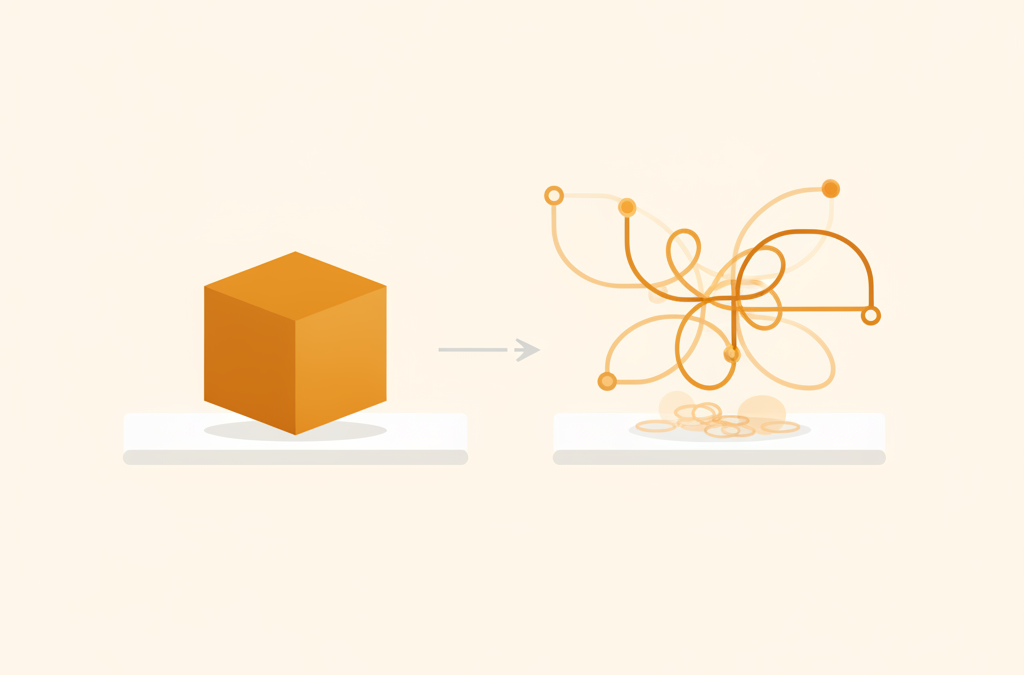
Spot trading is buying or selling an asset for immediate delivery at its current price, transferring real ownership rather than a contract.
Mechanics, not signals. This explains how a market feature works. It is not a trading strategy, entry, target, or recommendation to buy or sell anything.
Quick answer
Spot trading is buying or selling an asset for immediate delivery at its current market price, the spot price, with ownership changing hands right away. In crypto, buying a coin on an exchange and having it land in your account is a spot trade: you own the coin outright, with no contract, expiry, or borrowed money required.
Key points
- Spot trading settles almost immediately at the current market price and transfers real ownership of the asset.
- The spot price is what an asset costs for immediate delivery, distinct from a futures price for a later date.
- Spot trades match buyers and sellers through an order book of bids and asks.
- Unlike derivatives, standard spot trading does not use leverage, margin, or an expiry date.
- In spot trading, losses are limited to what you paid, since there is no borrowed position to be liquidated.
- Spot markets help set the reference price that derivatives contracts are built around.
Spot trading is buying or selling an asset for immediate delivery at its current market price, the spot price, with ownership changing hands right away. In crypto, when you buy Bitcoin on an exchange and it lands in your account, that is a spot trade. You own the coin outright. No contract, no expiry, no borrowed money.
The word spot means on the spot: settlement happens now, or close to it, rather than on some future date. This article describes how the mechanism works, not what or when anyone should trade. It is not trading advice, and market rules differ by jurisdiction.
What does spot trading actually mean?
It means a real exchange of asset for money at today’s price. You hand over cash, you receive the asset, and it is yours. The transfer of ownership is the defining feature. That is what separates a spot trade from a contract about future prices.
In traditional markets, spot settlement often takes a day or two. In crypto, it is usually near-instant once the trade fills. Either way, the principle holds: you end up holding the thing you bought.
What is the spot price?
The spot price is what an asset costs right now for immediate delivery. It moves continuously as buyers and sellers meet, and it is the number quoted when someone asks what a coin is worth today.
Compare it with a futures price, which is agreed today for delivery later. The two are rarely identical. That difference between spot and futures has a name, the basis, and it is the reference point for whole categories of trading. But the spot price sits underneath all of it as the anchor.
How does a spot trade work?
On an exchange, spot trades run through an order book. Buyers post bids, the prices they will pay. Sellers post asks, the prices they will accept. When a bid meets an ask, a trade executes.
Two common order types cover most activity. A market order takes the best available price immediately, prioritizing speed. A limit order sets the price you are willing to accept and waits until the market reaches it, prioritizing price over certainty.
Once the order fills, settlement follows and the asset moves to your account. That is the entire loop: match, fill, settle, own.
Spot trading vs derivatives trading
This is the distinction most people are really asking about. Spot means owning the asset now; derivatives mean holding a contract tied to its price. The table lays it out.
| Feature | Spot trading | Derivatives trading |
|---|---|---|
| What you hold | The actual asset | A contract on the price |
| Ownership | Transfers to you | No transfer of the asset |
| Delivery | Immediate | Future date or none (perpetuals) |
| Leverage | None in standard spot | Common, often high |
| Maximum loss | What you paid | Can exceed initial margin |
| Expiry | None | Futures and options expire |
Why does no leverage change everything?
Because it caps the damage. In standard spot trading you pay the full price, so the worst case is the asset going to zero and you losing what you put in. Painful, but bounded. There is no borrowed position to be liquidated, and no margin call arriving at 3 a.m.
Derivatives, by contrast, usually run on leverage. That can multiply gains, and it can wipe out a position on a small adverse move. Spot removes that entire failure mode. You simply own the asset and ride its price, up or down.
Why do spot markets matter?
They set the reference price everything else leans on. Futures, options, and perpetual swaps are all built around an underlying spot price; without a reliable spot market, those contracts have nothing to point at.
Spot volume also signals genuine demand to own an asset, not just to bet on its direction. And for anyone who wants the coin itself, to hold it, move it, or use it, spot is the only route that actually delivers it. A derivative never puts the asset in your hands.
What are the risks and misconceptions?
Spot trading is simpler than derivatives, but simpler is not the same as safe. A few points get missed.
Price risk remains. You own the asset, so if its value falls, so does your holding. Owning something outright does not protect you from a falling market.
Custody risk. If you leave coins on an exchange, you are trusting that platform to hold them. Self-custody moves the responsibility, and the risk, to you.
Volatility. Crypto spot prices can swing hard and fast, which affects entry and exit even without any leverage in play.
Liquidity. Thinly traded assets can be hard to buy or sell at the quoted price, and large orders can move the market against you.
What is the role of makers and takers?
Every spot market needs both. A maker posts an order that rests on the book, a bid or an ask that does not fill immediately, adding liquidity that others can trade against. A taker sends an order that fills right away against those resting orders, removing liquidity.
Exchanges often price the two differently, charging takers a little more and makers a little less, because resting orders keep the market deep and tradable. A small detail, but it explains why the same trade can cost different amounts depending on how it is placed.
The wider the pool of makers, the tighter the gap between the best bid and the best ask, known as the spread. A narrow spread is a sign of a liquid market where you can enter and exit near the quoted price. A wide one is a warning that getting out may cost more than you expect.
The bottom line
Spot trading is the plainest form of buying and selling: pay the current price, take ownership immediately, no contract and no leverage. Its opposite number, derivatives trading, keeps you in contracts tied to the price, with expiry dates and borrowed exposure that can amplify both directions. Spot caps your loss at what you paid and hands you the actual asset, while still leaving you exposed to price swings, custody choices, and volatility. This is a description of how the mechanism works, offered as general information and not as trading advice. Market rules vary by jurisdiction.
Sources
Frequently asked questions
What is the difference between spot and futures trading?
In spot trading you buy the asset now and own it immediately at the current price. In futures trading you agree to buy or sell at a set price on a future date, and you hold a contract rather than the asset until settlement.
Does spot trading use leverage?
Standard spot trading does not. You pay the full price and own the asset, so there is no borrowed position and no liquidation. Some platforms offer margin on spot markets separately, but plain spot trading is unleveraged.
What is the spot price?
It is the current price for immediate delivery of an asset. It differs from a futures price, which is set today for delivery on a later date, and the gap between them is called the basis.
Is spot trading safer than derivatives?
It carries less structural risk because there is no leverage or liquidation, so your loss is capped at what you paid. The asset can still fall in value, and you still face custody and market risk, so safer is relative, not absolute.
Is this trading advice?
No. This article describes how spot markets work mechanically, not what or when to trade. It is not trading advice, and market rules differ by jurisdiction.
Related

How perpetual futures work
Perpetual futures are futures with no expiry, kept near spot by funding payments, valued on a mark price, and backed…
What Is TWAP? Time-Weighted Average Price
TWAP is an execution method that splits a large order into equal pieces traded at regular intervals to track the…

Impermanent loss, explained arithmetically
Impermanent loss is the shortfall a liquidity provider takes versus holding when pool prices diverge. See the exact constant-product math…