What Is Crypto Arbitrage?
Crypto arbitrage is buying a coin where it is cheaper and selling where it is dearer to capture the price gap, minus fees and delays.
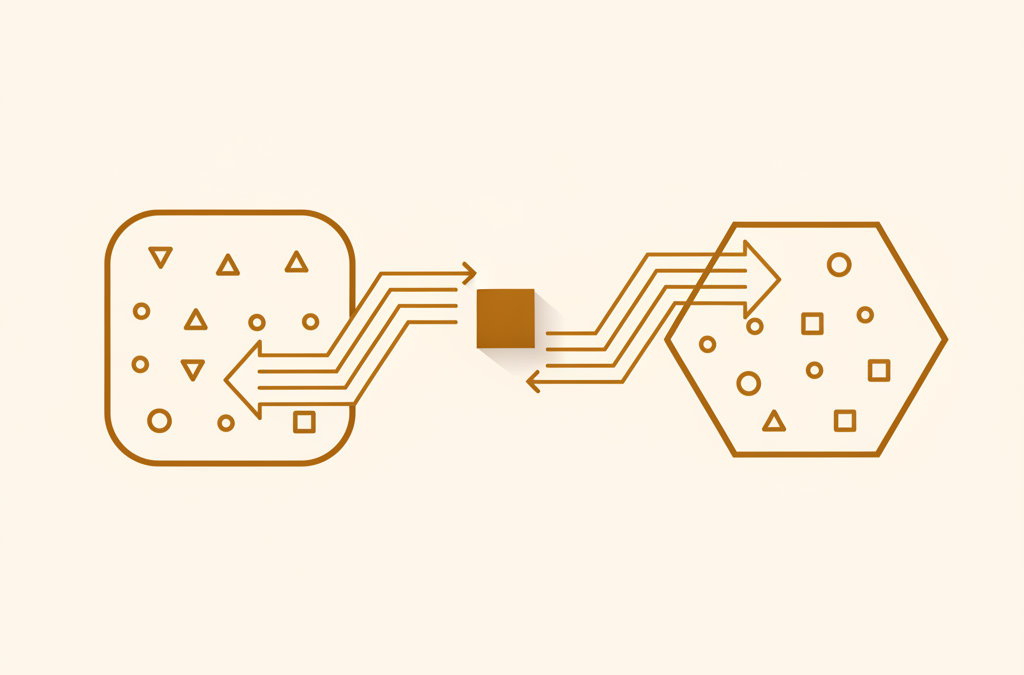
Mechanics, not signals. This explains how a market feature works. It is not a trading strategy, entry, target, or recommendation to buy or sell anything.
Quick answer
Crypto arbitrage is the practice of exploiting price differences for the same cryptocurrency across markets by buying where it is cheaper and selling where it is more expensive, capturing the gap as profit. The main forms are spatial (across exchanges), triangular (across three pairs on one exchange), and statistical. Gaps are usually tiny and short-lived, and fees, transfer times, and slippage can erase them.
Key points
- Arbitrage seeks to profit from the same asset trading at different prices in different markets at the same time.
- Spatial arbitrage buys on one exchange and sells on another; triangular arbitrage cycles through three pairs on a single exchange.
- Statistical arbitrage uses quantitative models across many assets rather than a single, obvious price gap.
- Price gaps are typically small and can vanish within seconds, so much crypto arbitrage is automated.
- Trading fees, withdrawal and network fees, transfer delays, and slippage can wipe out an apparent gap.
- Arbitrage tends to push prices toward alignment across markets, improving overall price consistency.
Crypto arbitrage is the practice of exploiting price differences for the same cryptocurrency across markets — buying where it is cheaper and selling where it is more expensive, and capturing the gap as profit. Because it relies on a difference that already exists rather than a forecast of future prices, arbitrage is often described as a market-neutral idea. In practice, fees, delays, and execution risk make it far harder than the simple picture suggests.
This article explains the main types of crypto arbitrage and the mechanics behind them. It describes how the strategy works and the frictions that constrain it; it is educational and is not trading advice.
What is crypto arbitrage?
Arbitrage is buying an asset in one market and selling it in another to profit from a price discrepancy. In crypto, the same coin can trade at slightly different prices on different exchanges at the same moment, because each venue has its own order book, liquidity, and flow of buyers and sellers.
An arbitrageur acts on those discrepancies rather than trying to predict where a price is heading. The decision rests on a gap that is observable right now, which is why arbitrage is conceptually distinct from directional trading or investing.
How does crypto arbitrage work?
The basic mechanism is to identify the same asset priced differently in two places, buy at the lower price, and sell at the higher one before the gap closes. The profit is the difference minus every cost involved in completing both legs of the trade.
Speed is central. In modern markets, an obvious price inefficiency often lasts only seconds before others act on it and the prices converge. As a result, much crypto arbitrage is automated: software scans many venues continuously and executes both sides far faster than a person could.
Capital placement matters too. To act instantly on a cross-exchange gap, a trader often needs funds already positioned on both venues, so they can buy on one and sell on the other without waiting for a transfer. Pre-funding removes the delay but ties up capital and spreads it across multiple platforms, each with its own risks. The alternative — buying, transferring, then selling — is slower and exposes the trade to price movement while the assets are in transit.
What are the main types of crypto arbitrage?
There are three commonly cited forms, distinguished by where and how the price gap is captured. The table below compares them.
| Type | Where it happens | How it works |
|---|---|---|
| Spatial (cross-exchange) | Two or more exchanges | Buy the asset on the cheaper venue, sell it on the dearer one |
| Triangular | A single exchange | Cycle through three trading pairs to return to the starting asset with more of it |
| Statistical | Many assets at once | Use quantitative models to trade large sets of related assets simultaneously |
Spatial arbitrage, also called cross-exchange arbitrage, is the most intuitive: the same coin is cheaper on one exchange than another, so a trader buys on the first and sells on the second. The catch is that capturing the gap may require holding funds on both venues or transferring assets between them.
Triangular arbitrage stays within one exchange and exploits inconsistencies among three trading pairs — for example, converting asset A to B, B to C, and C back to A, ending with more of A than you started with. Because everything happens on one venue, it avoids cross-exchange transfers, but the mispricings are typically small and fleeting.
Statistical arbitrage is more complex, using statistical and econometric models to trade large baskets of assets whose prices are expected to move in related ways. It is a quantitative discipline rather than a single, visible price gap.
Why doesn’t arbitrage guarantee easy profit?
The theory looks like free money, but real markets impose frictions that often shrink or erase the gap. Trading fees apply on both legs. Moving crypto between exchanges incurs network fees and can take minutes to hours, during which the price can change. Fiat deposits and withdrawals add further delays and costs.
There is also execution risk. A large order can suffer slippage, filling at a worse average price than quoted. An exchange might pause withdrawals, freeze an account, or experience an outage at the worst moment. And meaningful profit on a tiny percentage gap usually requires substantial capital, which concentrates exposure to these very risks. None of this is a recommendation to attempt arbitrage; it simply explains why the apparently riskless idea is not riskless in practice.
How does arbitrage differ from ordinary trading?
Ordinary directional trading and investing bet on where a price will go: up for a buyer, down for a short seller. Arbitrage, by contrast, aims to be neutral to the overall direction, profiting from a difference between two prices rather than a change in one price over time. That distinction is the reason arbitrage is treated as its own category of market activity, even though both involve buying and selling.
Why does arbitrage matter for markets?
Arbitrage plays a useful role in price formation. When traders buy where an asset is cheap and sell where it is dear, their activity pushes the two prices toward each other. Repeated across many participants, this keeps the same asset priced consistently across venues and helps correct temporary distortions.
That self-correcting pressure is also why durable, large price gaps are rare in liquid crypto markets: the moment a real gap appears, arbitrageurs compete to close it. The visible result is that major coins tend to trade within a narrow band across reputable exchanges.
The bottom line
Crypto arbitrage means capturing a price difference for the same asset across markets — spatially between exchanges, triangularly across pairs on one exchange, or statistically across many assets. The concept is simple, but fees, transfer delays, slippage, and capital requirements make it genuinely difficult, and the competition that makes it possible is also what makes the gaps small and short-lived. Understanding how arbitrage works also explains why prices stay broadly aligned across venues. This explainer covers mechanics only and is not trading advice.
Sources
Frequently asked questions
What is crypto arbitrage in simple terms?
It is buying a cryptocurrency in one market where it is cheaper and selling it in another where it is more expensive, keeping the difference. The trader profits from the price gap itself rather than from predicting where the price will go next.
What are the main types of crypto arbitrage?
The three most cited forms are spatial (cross-exchange) arbitrage, which buys on one venue and sells on another; triangular arbitrage, which cycles through three trading pairs on a single exchange; and statistical arbitrage, which uses quantitative models across many assets at once.
Why doesn't arbitrage make everyone rich?
Price gaps are usually tiny and disappear within seconds as others act on them. Fees, network and withdrawal costs, transfer delays, slippage, and the capital required often shrink or erase the theoretical profit, and moving funds between venues carries its own risks.
Is crypto arbitrage risk-free?
No. Prices can move during transfers, a withdrawal can be delayed, an exchange can pause withdrawals, fees can exceed the gap, and orders may fill at worse prices than quoted. These execution and counterparty risks make real-world arbitrage far from riskless.
Does arbitrage affect market prices?
Yes. By buying where an asset is cheap and selling where it is dear, arbitrageurs push those prices toward each other. This tends to keep the same asset priced consistently across markets, which is part of why gaps are usually small and brief.
Related

What Is Margin Trading in Crypto?
Crypto margin trading uses borrowed funds and collateral to open larger positions, which magnifies both gains and losses and adds…

Slippage: why you get a different price
Slippage is the gap between the price you expected and the price you got. Here is why slippage happens as…

What is a candlestick chart?
A candlestick chart shows the open, high, low and close for each period. Learn how to read a candle's body,…