What is a testnet?
A testnet is a practice copy of a blockchain where the coins have no value. Learn what a testnet is, how it works, and why every serious network runs one.
Quick answer
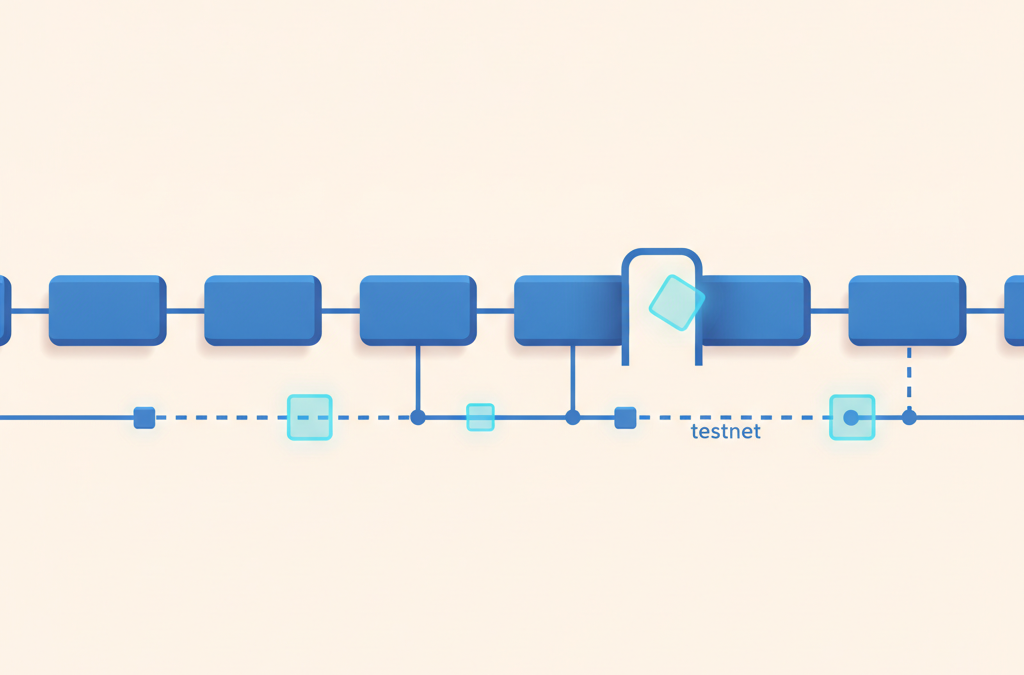
A testnet is a fully working copy of a blockchain used for testing, where the coins have no real value. Developers use it to try software, deploy smart contracts and rehearse upgrades before anything hits the live network, called the mainnet, where coins are worth real money.
Key points
- A testnet is a practice copy of a blockchain where coins have no real value
- Developers use it to test software and rehearse upgrades before mainnet
- You get free test coins from a faucet, not by buying them
- Testnets can be reset, so nothing on them is permanent
- Never send real assets to a testnet, and never buy testnet coins
Before a blockchain upgrade ever touches real money, it gets rehearsed somewhere safe — and that somewhere is usually a testnet. A testnet is a fully working copy of a blockchain network used for testing, where the coins have no real value and mistakes cost nothing. Developers use it to try out software, deploy smart contracts and rehearse upgrades before any of it reaches the real network — the mainnet, where coins are worth real money.
The word sounds technical. The idea isn’t: a testnet is a practice environment. This article covers how a testnet works, why every serious network runs one, how you get test coins, and the safety point every user should take away from the simple fact that testnets exist.
Testnet vs mainnet
Every public blockchain you actually transact on is a mainnet. It’s the live network where blocks carry real value and transactions are final. A testnet mirrors that network’s technology closely, with one deliberate difference: its native coins are worthless and handed out for free. That single change is what makes a testnet safe to break.
| Mainnet | Testnet | |
|---|---|---|
| Coin value | Real monetary value | None; free to obtain |
| Purpose | Live use | Testing and rehearsal |
| Cost of mistakes | Real losses | Effectively zero |
| Data | Permanent, authoritative | Disposable; may be reset |
Because a testnet closely resembles the real thing, code that behaves correctly there is far more likely to behave correctly on mainnet. But because its coins are free, there’s no financial pressure and no reason for anyone to attack it seriously — which is exactly why it’s not a place to store anything of value.
How a testnet works
A testnet runs the same core software as its mainnet: the same transaction format, the same block structure, and usually the same or very similar consensus rules. Nodes validate blocks, transactions get confirmed, and you can watch the whole thing on a block explorer, just like on mainnet. The difference is entirely in the economics — not the mechanics.
Testnets usually make their coins easy to get, so developers aren’t left waiting on them. On proof-of-stake test networks, for instance, the barrier to producing blocks is deliberately lowered so the network keeps ticking along without a real economy behind it. Ethereum’s developer documentation lists its current public test networks and explains that they exist for exactly this kind of pre-production testing.
What testnets are used for
- Smart contract development. Developers deploy and run contracts on a testnet to find bugs before real money is anywhere near them.
- Wallet and app testing. New wallets and applications get exercised end to end without risking user funds.
- Network upgrades. Major protocol changes are rehearsed on testnets first, so the community can catch problems before they hit mainnet.
- Learning. Newcomers can practise sending transactions and poking at contracts safely.
Bitcoin has run its own testnet for years for the same reasons, and Ethereum maintains public testnets that its client teams and developers use ahead of every significant change. The pattern is universal: rehearse where mistakes are free, then ship to where they aren’t.
Public testnets, local testnets and forks
Not every test environment is a shared public network. It helps to know the main flavours, because developers reach for different ones at different stages:
- Public testnets. Shared networks, like Ethereum’s Sepolia and Holesky, that many developers use at once. They behave most like the real thing and suit final testing before mainnet.
- Local test networks. A single-machine network a developer spins up on their own computer to iterate fast and privately, resetting it whenever they like.
- Forked environments. A temporary copy of mainnet’s current state, used to test against real conditions without touching the live chain.
They’re complementary. A developer might start locally for speed, move to a public testnet to test with others under realistic timing, and only then deploy to mainnet. Each step widens the audience and the realism while keeping the stakes at zero until the very last move.
Public testnets do get retired and replaced over time as networks evolve, which is why the specific names change and why nothing on a testnet should be treated as permanent. Ethereum’s documentation keeps a current list precisely because the roster shifts.
How you get test coins from a faucet
Because testnet coins have no value, you can’t buy them and you don’t mine them in any meaningful way. You request them from a faucet — a service that sends small amounts of test coins to any address that asks. Faucets usually add light anti-spam checks so one user can’t drain them, but the coins themselves are free and only good on that testnet.
Once you’ve got test coins in a wallet configured for the testnet, you can send transactions, deploy contracts, and inspect it all on a testnet block explorer. It looks and feels like the real network — that’s the point. Testnets usually run their own dedicated block explorers, separate from the mainnet ones, so you view testnet activity on a testnet explorer and never mix the two up.
The safety lesson hidden in testnets
Testnets carry a warning that’s easy to miss. Test coins aren’t real, and testnets can be reset or shut down, which means anything on them is disposable. Two practical rules fall out of that:
- Never send real assets to a testnet address, and never treat testnet coins as something you can sell. People occasionally get tripped up by the resemblance to mainnet and lose funds mixing the two.
- Be sceptical of anyone selling “testnet tokens.” Faucets give them away for free, so any offer to sell them is a red flag — and scams sometimes exploit newcomers who don’t yet know that.
Grasping the difference between a testnet and a mainnet is good general hygiene, too: it trains you to always check which network a wallet or app is pointing at before you act. Most wallet software shows the active network clearly, and switching between mainnet and a testnet is deliberate — but glance at that indicator before signing anything, because an address that looks identical can belong to a completely different network.
And there’s a wider reason to care even if you never touch a testnet yourself: you benefit from them constantly. Every reputable wallet, application and protocol upgrade you rely on was almost certainly rehearsed on a testnet first. When a network prepares a major change, running it on a public testnet lets independent developers, node operators and infrastructure providers all try it under realistic conditions and surface problems while the cost of fixing them is still zero. By the time the change reaches mainnet, it has already survived a dress rehearsal in front of a critical audience.
In that sense, testnets are part of the quality control behind the whole ecosystem. They’re the reason serious upgrades tend to arrive already stress-tested, rather than being tried for the first time on the network where your money lives.
The bottom line
A testnet is the rehearsal stage of a blockchain: a faithful copy of the network where coins are free and failure is harmless, used to test software and upgrades before they reach the real mainnet. For a developer, it’s where the real work of finding bugs happens. For an everyday user, the takeaways are simpler — testnet coins have no value, testnets can disappear, and knowing which network you’re on is part of staying safe.
Sources
Frequently asked questions
What is a testnet used for?
A testnet is a practice copy of a blockchain used to test software, deploy smart contracts and rehearse network upgrades without risking real money, because its coins have no value.
Do testnet coins have any value?
No. Testnet coins are free, are handed out by faucets, and only work on that test network. Any offer to sell them should be treated as a scam.
What is the difference between a testnet and a mainnet?
A mainnet is the live network where coins have real value and transactions are final. A testnet mirrors it technically but uses valueless coins and can be reset.
Related
What Is a Stablecoin?
Discover what is a stablecoin and how it maintains a stable value in the volatile world of cryptocurrency.
Token approvals and why they drain wallets
Token approvals explained: how the permissions you sign let contracts move your tokens, why unlimited approvals drain wallets, and how…

What is a Merkle tree?
A Merkle tree summarises many items into one hash. Learn what a Merkle tree is, how it is built from…