What Is a Replay Attack in Crypto?
A replay attack rebroadcasts a valid transaction on another chain; here is how it happens after a fork and how it is prevented.
Quick answer
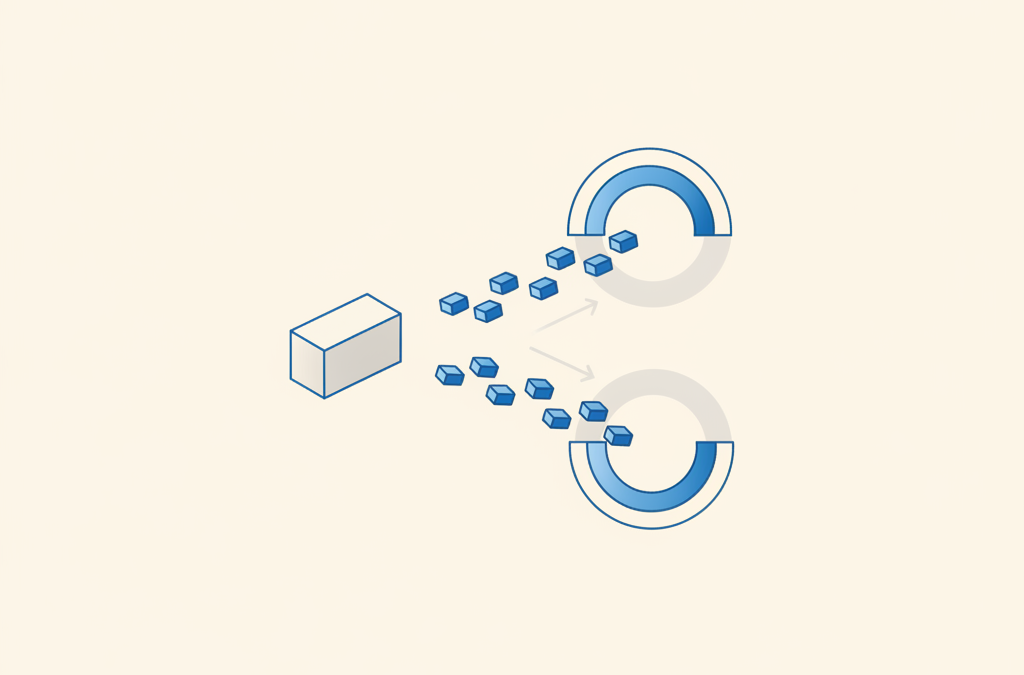
A replay attack in crypto happens when a valid transaction from one blockchain is copied and rebroadcast on another blockchain where it is also valid, causing a transfer the sender never intended. It is a common risk after a hard fork, when two chains share the same transaction format and history. Replay protection, such as Ethereum's EIP-155 chain ID, prevents it by making a signed transaction valid on only one chain.
Key points
- A replay attack rebroadcasts a legitimate signed transaction on a second chain where it is also valid.
- The risk is greatest after a hard fork, when two chains share identical address and transaction formats.
- The 2016 Ethereum and Ethereum Classic split is a widely cited real-world example of replay exposure.
- Ethereum's EIP-155 adds the chain ID to the signed data so a signature works on only one network.
- Strong replay protection makes new-chain transactions inherently incompatible with the old chain.
- A chain ID is unique to each blockchain, so nodes reject transactions signed for a different network.
A replay attack in crypto occurs when a valid, already-broadcast transaction is copied and rebroadcast on a second blockchain where it is also valid — causing a transfer the sender never intended. Because the original transaction was legitimately signed, the duplicate is accepted without the attacker needing the victim’s private key.
Replay attacks are a well-understood risk in blockchain systems, and they are most dangerous in a specific situation: right after a hard fork splits one chain into two. Understanding how they work explains why features such as chain IDs exist and why they are considered essential infrastructure today.
What is a replay attack in simple terms?
Imagine you sign a check and hand it over. A replay attack is the digital equivalent of someone photocopying that signed check and cashing it a second time on a different bank that happens to honor the same signature. You authorized one payment, but two go through.
In crypto, the “signature” is a cryptographic one attached to a transaction. If two blockchains both recognize that signature and the transaction format around it, the same signed transaction can be submitted to both. The attacker does not forge anything — they simply reuse a genuine transaction.
How does a replay attack work after a hard fork?
A hard fork happens when a blockchain splits into two separate chains, for example due to a protocol disagreement. Right after the split, both chains typically share the same transaction history, the same address format, and the same signing rules, because they descended from a common origin.
That shared structure is the vulnerability. An attacker can watch a legitimate transaction on one chain, capture its data, and rebroadcast it on the other chain, where it is still valid. If a user moves funds on the new chain, the same movement may be forced on the old chain, and vice versa — potentially draining balances on both.
The most frequently cited example is the 2016 split of Ethereum. The original chain continued as Ethereum Classic while the new chain kept the name Ethereum, and because the two shared nearly identical specifications, transactions were valid on both, exposing users to replay.
How is a replay attack prevented?
The core defense is replay protection: making a transaction signed for one chain invalid on any other. There are two broad approaches, summarized below.
| Approach | How it works | Who acts |
|---|---|---|
| Strong replay protection | New chain marks transactions so they are inherently incompatible with the old chain | Built in by the protocol |
| Opt-in replay protection | Users add a marker or take manual steps to make a transaction unique | Each user individually |
Strong protection is safer because it does not depend on every user knowing what to do. When a fork ships strong replay protection, transactions on the two chains simply cannot be interchanged, closing the attack entirely for ordinary users.
What role does the chain ID play?
On Ethereum and compatible networks, the key mechanism is the chain ID. A chain ID is a number that identifies a specific blockchain — mainnet has one value, and each other network has its own. It is not unique per transaction; it is unique per chain.
Ethereum’s EIP-155 introduced replay protection by including the chain ID in the data a sender signs. Before EIP-155, a transaction’s signed content did not reference any particular network, so it could be reused across chains. Afterward, the signature is bound to one chain ID, and a node on a different network will reject it. Most modern clients refuse to accept transactions that lack this protection over public connections.
This also relates to the transaction nonce, a per-account counter that prevents the same transaction from being processed twice on the same chain. The nonce stops duplication within a network, while the chain ID stops duplication across networks.
What are the risks and misconceptions?
A common misconception is that a replay attack steals private keys or breaks cryptography. It does neither. It exploits the fact that a legitimately signed transaction can be valid in more than one place, so the defense is about scoping a signature to a single chain rather than strengthening the signature itself.
Another misconception is that replay is only a concern for developers. In the early hours of a contentious fork, ordinary holders can be affected if they transact before protections are in place, which is why exchanges often pause deposits and withdrawals around forks until replay protection is confirmed.
For readers who move funds across networks, the practical takeaway is mechanical, not strategic: confirm that a chain uses proper replay protection and a distinct chain ID. This article describes how the mechanism works and is not trading or financial advice.
How do networks and users guard against replay today?
On the protocol side, distinct chain IDs are now standard practice across Ethereum-compatible networks. Every major EVM chain publishes its own chain ID, and wallets and clients embed that value in the transactions they sign. Because the signature is scoped to one chain, a transaction crafted for one network is simply rejected by the others, which neutralizes cross-chain replay for everyday transfers.
On the operational side, the riskiest moments remain contentious hard forks, especially those launched quickly or without strong replay protection built in from the start. During these windows, exchanges and custodians commonly suspend deposits and withdrawals until the new chain’s protections are verified, and cautious users avoid transacting until the situation stabilizes.
For individuals, the safeguards are straightforward. Use wallet software that implements current standards such as EIP-155, be wary of moving funds in the immediate aftermath of a fork, and treat any tool that asks you to sign a transaction without a clear chain context with suspicion. These are mechanical precautions about how transactions are constructed, not judgments about which assets to hold.
The bottom line
A replay attack rebroadcasts a genuine transaction on a second chain where it is also valid, and it is most dangerous right after a hard fork that leaves two chains sharing the same format. The fix is replay protection — above all, binding a signed transaction to a single network through a chain ID, as Ethereum’s EIP-155 does. With distinct chain IDs and strong protection, a signature valid on one chain can no longer be replayed on another.
Sources
Frequently asked questions
When are replay attacks most likely?
They are most likely immediately after a hard fork that produces two chains sharing the same history, address format, and transaction structure. Because a transaction can be valid on both, an attacker or even an accidental rebroadcast can cause the same transfer to execute on the second chain.
How does EIP-155 stop replay attacks?
EIP-155 includes the chain ID in the data that a sender signs, so the resulting signature is tied to one specific network. A node on a different chain, with a different chain ID, will reject that transaction, which prevents the signed transaction from being replayed elsewhere.
What is the difference between strong and opt-in replay protection?
Strong replay protection is built into the new chain and automatically makes its transactions incompatible with the old one. Opt-in protection requires users to take manual steps, such as adding a specific marker to a transaction, to protect themselves individually.
What is a chain ID?
A chain ID is a number that identifies a specific blockchain, such as Ethereum mainnet or another EVM network. It is not unique per transaction but per chain, so including it in a signature lets nodes confirm a transaction was intended for their network and reject it otherwise.
Can replay attacks happen without a fork?
The classic scenario is a fork, but the same principle applies whenever two networks accept identically formatted, identically signed transactions. Modern EVM chains use distinct chain IDs specifically so that a signature valid on one network cannot be replayed on another.
Related
What is a testnet?
A testnet is a practice copy of a blockchain where the coins have no value. Learn what a testnet is,…
what is a seed phrase
Learn what is a seed phrase in crypto, its importance for wallet security, and how it helps in restoring access…

What is cold storage in crypto?
Cold storage in crypto means keeping your private keys offline. Learn what cold storage is, how it protects your coins,…