What is a multisig wallet?
A multisig wallet needs more than one key to approve a transaction. Learn what a multisig wallet is, how the M-of-N threshold works, and its trade-offs.
Quick answer
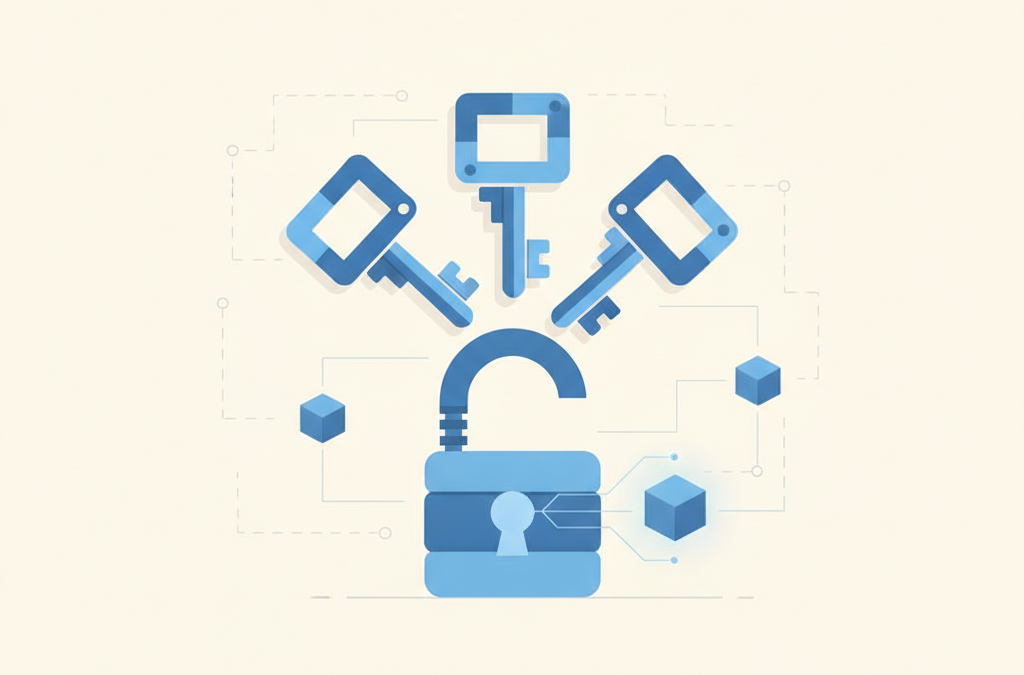
A multisig wallet needs more than one private key to approve a transaction, using a rule like two-of-three. No single key can move the funds on its own, so it removes the single point of failure that makes ordinary one-key wallets so easy to lose or get stolen from.
Key points
- A multisig wallet requires several keys to approve any transaction
- An M-of-N rule, such as 2-of-3, sets how many of the keys are needed
- No single stolen key is enough, and no single lost key is fatal
- It suits treasuries, teams and individuals wanting a backup key
- Trade-offs are more complexity, more backups and slower signing
Lose one key and lose everything — that’s the flaw a multisig wallet is built to fix. It’s a crypto wallet that needs more than one private key to approve a transaction. Rather than a single key being able to move the funds, a multisig sets a rule like “two of three keys must sign,” so no lone person and no single compromised device can spend on its own.
Multisig is short for multi-signature, and it’s one of the most effective ways to strip single points of failure out of crypto custody. This article covers what a multisig wallet is, how the signing threshold works, why it hardens security, and the trade-offs to weigh before you set one up.
From one key to many
In an ordinary wallet, one private key controls the lot. Whoever holds that key can move the money — so a single stolen key, a lost device, or one careless moment can wipe you out. That’s the fundamental weakness a multisig wallet exists to close.
A multisig swaps the single key for a set of keys plus a rule about how many must sign to authorise a transaction. The rule is usually written “M-of-N”: there are N keys in total, and any M of them are needed to spend.
How the M-of-N threshold works
The threshold is the heart of the thing. A few common setups make it concrete:
| Setup | Meaning | Typical use |
|---|---|---|
| 2-of-2 | Both keys required | Two parties who must jointly agree |
| 2-of-3 | Any two of three keys required | Individuals wanting a backup key; small teams |
| 3-of-5 | Any three of five keys required | Organisations and treasuries |
The 2-of-3 arrangement is popular for good reason. Spread the three keys across different devices or locations, and since you only need two to transact, losing any one key doesn’t lock you out — and stealing any one key doesn’t hand an attacker control. Fault tolerance and attack resistance, out of the same structure.
How a multisig transaction gets signed
Spending from a multisig is a short, collaborative affair:
- Propose. One participant creates the transaction — where the funds go, and how much.
- Sign. Each required signer reviews it and adds their signature with their own key, often from their own device.
- Execute. Once enough signatures are gathered to meet the threshold, the transaction becomes valid and gets broadcast to the network.
On some networks a smart contract enforces the rule, releasing funds only when enough valid signatures are present. On others — Bitcoin, for one — multisig is supported at the script level of the protocol itself. Either way, the network won’t move the funds unless the threshold is met.
Here’s a detail worth knowing: the signers don’t have to be in the same room or sign at the same moment. Each keyholder can review and sign from their own device, on their own schedule, and the partly signed transaction gets passed along until it has enough signatures. That’s what lets a treasury be run by people in different cities — or by one person keeping keys in different places — without ever bringing all the keys onto a single machine, which would quietly reintroduce the very single point of failure multisig set out to remove.
Why multisig improves security
The security payoff comes straight from removing single points of failure:
- No single stolen key is enough. An attacker who compromises one device still can’t spend — they’re missing the other required signatures.
- No single lost key is fatal. In a 2-of-3, you can lose one key, recover with the other two, then rotate to a fresh setup.
- Keys can be separated. Different signers, different devices, different locations — an attacker would have to breach several at once.
- It enforces shared control. For a business or a group, no single person can move the treasury alone, which cuts insider risk and limits the damage when one person gets phished.
That makes multisig a natural partner to cold storage: keep the signing keys on separate offline devices and a thief would need physical access to several hardware wallets to take anything. It blunts phishing, too, which tends to go after one person at a time. Tricking a single signer into approving a malicious transaction isn’t enough when the threshold forces others to review and approve independently — the group gets a built-in second look before anything moves.
Who uses multisig, and the trade-offs
Multisig is used heavily by exchanges, funds, DAOs and other organisations guarding large treasuries, and more and more by individuals who want a backup key without handing custody to anyone else. It’s a form of self-custody, so it keeps you firmly on the non-custodial side while adding resilience. For an organisation, part of the appeal is accountability rather than raw security: because several named people have to sign, moving funds becomes a deliberate, auditable act instead of something one person can do quietly. That governance benefit is often worth as much as the protection against outside theft.
For an individual, the motivation is usually backup and inheritance rather than shared control. With a 2-of-3 you might keep one key on a hardware wallet you use day to day, store a second somewhere safe, and leave a third with a trusted person or at a separate site. You alone can transact with any two of them — but if one is ever lost or destroyed, you can still recover, and no single stolen key threatens the funds. It turns the fragile “one seed phrase to lose” model into something with a margin for error.
The upside comes with real trade-offs to plan for:
- More complexity. You’re now managing several keys and their backups instead of one, and setup takes more care.
- Slower transactions. Collecting multiple signatures needs coordination — a feature for security, a cost for convenience.
- Threshold mistakes. Set the threshold too strict and you can lock yourself out after losing keys; too loose and you weaken the protection. A 2-of-3 balances the two for a lot of people.
- You still control the keys. Multisig spreads risk; it doesn’t outsource it. Lose too many keys at once and the funds are still gone.
- Recovery needs a plan. Each key needs its own secure backup, and the group needs a clear, tested procedure for replacing a lost one before it turns into an emergency.
It’s also worth telling multisig apart from features that only look similar. Some services advertise “two-factor” logins or approval steps that happen inside a single company’s system. Those can help — but they aren’t the same as on-chain multisig, where the requirement for multiple signatures is enforced by the network itself and no single provider can override it. When the rule lives on the blockchain, it holds even if one device, one account, or one company is compromised. And that’s the deeper reason multisig is trusted for treasuries: the protection doesn’t rest on any one party’s goodwill or uptime.
The bottom line
A multisig wallet requires several keys to approve any transaction, trading a single point of failure for a threshold rule like two-of-three. That one change makes it much harder for a thief to steal your funds — and much harder for a single slip to lose them — which is why organisations and careful individuals lean on it. The cost is added complexity and coordination. A fair price, when the goal is making sure no single key, and no single person, can ever move the money alone.
Sources
Frequently asked questions
What is a multisig wallet?
A multisig wallet requires more than one private key to approve a transaction, using a rule such as two-of-three, so no single key or single compromised device can move the funds alone.
What does 2-of-3 multisig mean?
It means there are three keys in total and any two of them are needed to spend. You can lose one key without being locked out, and a thief needs at least two keys to steal anything.
Is a multisig wallet safer than a normal wallet?
For most threats, yes, because it removes the single point of failure of one key. The trade-offs are more complexity, more keys to back up, and slower transactions that need several signatures.
Related
What Is a Crypto Exchange?
Discover what a crypto exchange is and how it functions as a marketplace for buying, selling, and trading digital currencies.

How to verify a contract address before interacting
How to verify a contract address before you interact: sourcing it safely, checking it on a block explorer, and spotting…
Token approvals and why they drain wallets
Token approvals explained: how the permissions you sign let contracts move your tokens, why unlimited approvals drain wallets, and how…